What Was the Norman Conquest?
A Battle for the English Crown
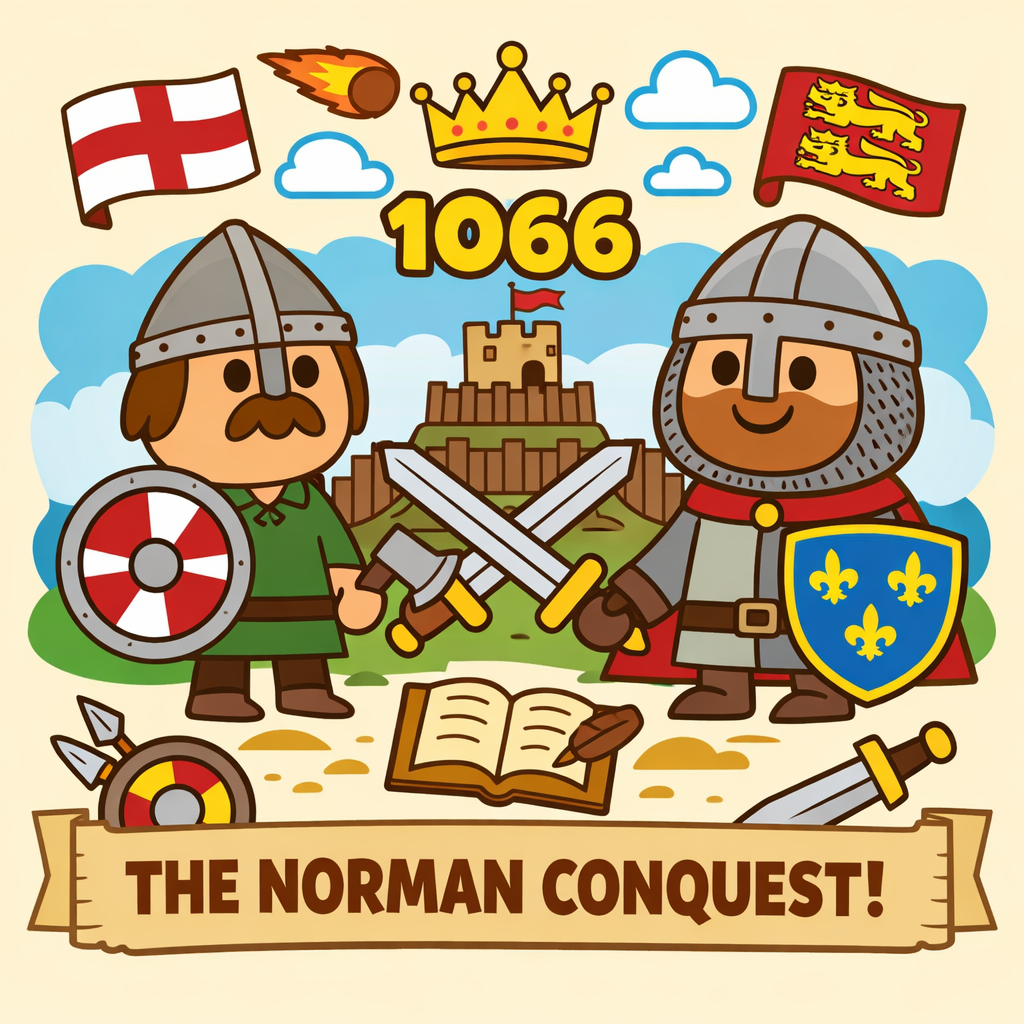
The Norman Conquest was when a man called William the Conqueror invaded England in the year 1066 and became king.
At the time, England was ruled by Harold Godwinson. But William, who was the Duke of Normandy in France, believed that he should be king instead.
So he gathered an army, built ships, and sailed across the English Channel to fight for the crown.
The Battle of Hastings
The most important event of the Norman Conquest was the Battle of Hastings.
It took place on 14 October 1066.
- King Harold and his Anglo-Saxon army fought bravely.
- William’s Norman army used clever battle tactics.
- King Harold was killed during the fight.
After this battle, William won control of England.
William Becomes King
On Christmas Day 1066, William was crowned King of England in Westminster Abbey.
From then on, he was known as William the Conqueror.
What Changed After the Norman Conquest?
The Norman Conquest changed England forever.
Here’s what happened next:
Castles Were Built
The Normans built strong stone castles all across England to control the land.
The Domesday Book
In 1086, William ordered a huge survey of England called the Domesday Book.
It recorded who owned land and how much it was worth.
Language Changed
The Normans spoke French.
Over time, French words mixed with English — and this helped shape the English language we speak today.
Why Is It Important?
The Norman Conquest was the last successful invasion of England.
It:
- Changed the royal family
- Changed the language
- Changed the law
- Changed the way land was owned
England became more connected to Europe because of it.
Tiny Champions Summary
The Norman Conquest happened in 1066 when William of Normandy defeated King Harold at the Battle of Hastings and became King of England.
It changed England’s rulers, language, castles, and laws — and shaped the country we know today.